
Phone
Working hours
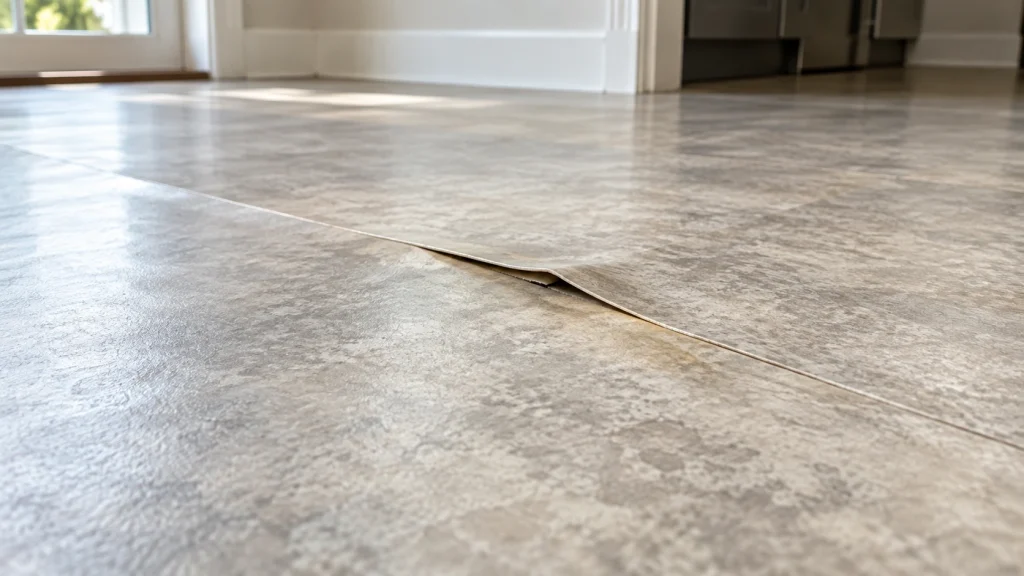
A raised edge between vinyl floor sections can look minor, but it tends to catch shoes, collect dirt, and become more visible with use. Before pressing it down or reaching for glue, work out what has lifted and why. The right repair for a loose sheet-vinyl seam may be quite different from the fix for a curling vinyl tile or plank.
Start by checking whether the flooring is sheet vinyl, individual tiles, or planks. Sheet vinyl may have a joined seam that was bonded or welded during installation. Tiles and planks have many joints; some are glued down, while others lock together and move as a floating floor. That distinction matters because a floating joint should not simply be glued to the subfloor.
Look at the shape of the problem. Is one edge curling upward, are two pieces separating, or is the joint raised on both sides? Notice whether the area feels soft, looks stained, or has a musty smell. Check nearby joints as well. A single loose edge suggests a different issue from lifting across a whole room.
Water can reach a seam through spills, wet cleaning, or a leak. Moisture can also come from the subfloor. If it interferes with adhesive or affects the material beneath the vinyl, the edge may loosen, or the joint may rise. A damp patch that repeatedly returns needs investigation before any repair; sealing the seam alone could conceal the source.
For example, a seam near a kitchen sink that lifts again after being pressed flat may be exposed to repeated splashes or a slow leak. Drying the visible surface is a useful first step, but the cause must be addressed for the repair to last.
Vinyl follows the surface beneath it. A ridge, movement in the subfloor, or a poorly prepared area can put stress on a joint. On glue-down flooring, an unsuitable adhesive or incomplete bonding may leave an edge free to curl. A sheet-vinyl seam can also fail if its original join was weak or has been damaged.
Temperature changes and direct sunlight may contribute to movement, particularly where the flooring lacks the space or installation conditions it needs. With click-together planks, a raised joint may indicate a damaged locking edge, an uneven subfloor, or pressure elsewhere in the floor. These causes require different repairs, even when the visible symptom looks similar.
Traffic concentrates stress at a loose edge. Chair wheels, furniture movement, and shoes can gradually enlarge a small gap. Once the edge stands proud, it is easier to snag, so prompt attention can prevent a local defect from spreading. Dirt worked into an open seam can also make rebonding harder.
A small, clean, dry loose edge on a glue-down tile or sheet may be repairable if the vinyl remains flat and intact. A local fix is less promising when the material has shrunk, become brittle, torn, or permanently curled. Widespread lifting, soft subflooring, recurring dampness or multiple separated joints call for a fuller assessment.
Check the flooring product and installation instructions if they are available. Adhesives, seam sealers and cleaning products need to suit the particular vinyl and installation method. A product that works on one type of flooring may damage another or make a later repair more difficult.
For more detailed information on this topic, read our guide on How LVT and Homogeneous Vinyl Differ in Layer Construction.
The first task is to stop the cause of the lifting. Locate and resolve any moisture source, then allow the area and subfloor to dry as appropriate. If the problem is an uneven or moving base, that may need correction before the vinyl can sit securely. Adhesive cannot flatten a ridge beneath the flooring.
For a limited glue-down repair, the usual sequence is:
Sheet-vinyl seams may also need a suitable seam treatment after the bond is restored. Where the original seam was welded, a damaged join can require specialist tools and materials. Avoid improvising with household glue or sealing the top of an edge that has not bonded underneath.
Click-together vinyl planks need a different approach. If a joint has disengaged, the installer may need to lift and reconnect the affected planks, check the locking edges, and correct any subfloor or expansion issue. A broken locking edge may mean replacing a plank. Surface glue can hold a visible edge temporarily while leaving the underlying problem in place.
Clean up spills promptly and use the care method recommended for the floor. Avoid leaving standing water at joints, and protect areas where furniture or chair wheels repeatedly stress an edge. Keep an eye on repaired seams; renewed movement can reveal moisture, subfloor movement, or an installation issue that was not visible during the first repair.
The key is to match the remedy to the floor construction and the cause. A clean, dry loose edge may need only a careful local repair. A lifting seam linked to moisture, a damaged joint, or an unstable base needs the underlying condition corrected first.
