
Phone
Working hours
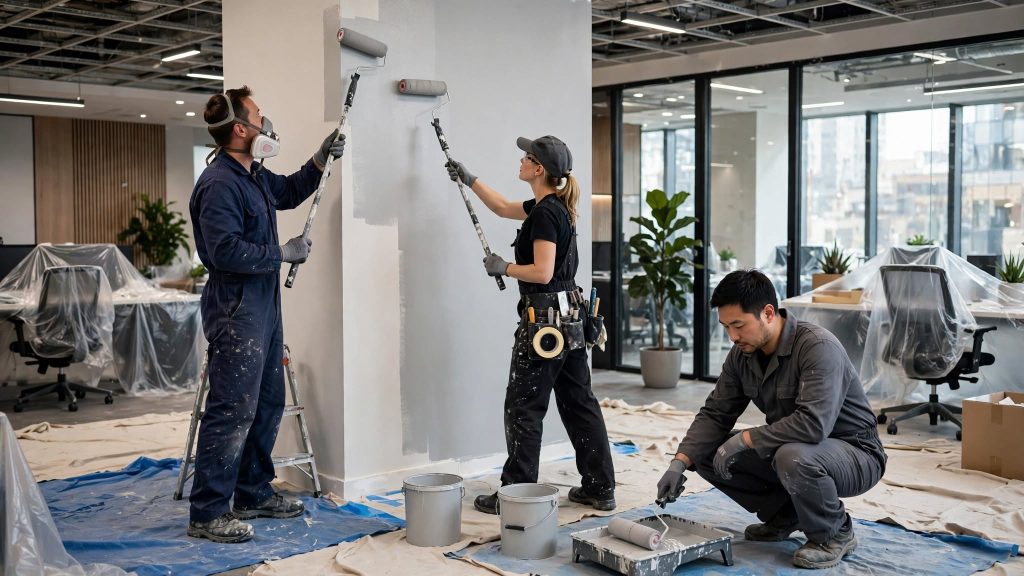
A commercial interior has to do more than look presentable. It needs to support daily activity, reflect the purpose of the space, and create an environment that feels cared for. Walls occupy a large part of what employees, customers, tenants, and visitors see, so their condition can have a noticeable effect on the overall impression of a property.
Professional painting improves commercial interiors by addressing more than wall color. Careful surface preparation, suitable coatings, consistent application, and thoughtful color choices can make offices, retail spaces, healthcare facilities, schools, and other commercial properties feel cleaner, more organized, and better suited to their use.
Commercial spaces often contain many visual elements, including flooring, furniture, lighting, signage, doors, and architectural details. Paint helps connect these elements and gives the interior a more unified appearance.
A professional painting plan considers how wall colors interact with existing finishes rather than treating walls as an isolated feature. For example, a warm neutral may complement natural flooring and wood furniture, while cooler shades can work well with metal, glass, and contemporary fixtures.
The goal is not necessarily to make every surface match. Instead, paint can establish a consistent visual direction while allowing important features to stand out.
One of the main differences between basic repainting and professional commercial painting is what happens before the finish coat is applied.
Commercial walls can develop scuffs, dents, small cracks, old patch marks, peeling areas, and uneven textures. Painting directly over these problems may make them even more noticeable.
Preparation may involve cleaning surfaces, filling minor imperfections, sanding rough areas, removing loose material, and applying primer where required. These steps create a more suitable base for the new coating.
In high-traffic interiors, walls regularly come into contact with chairs, carts, equipment, bags, and people. Reception areas, corridors, stairwells, break rooms, and shared workspaces can show wear relatively quickly.
Proper preparation helps the finished surface look more even and reduces the chance that existing defects will remain visible beneath fresh paint.
Commercial interiors do not all need the same type of finish. A quiet private office has different requirements from a busy hallway, restaurant seating area, medical waiting room, or retail store.
Paint selection should consider factors such as expected traffic, cleaning needs, lighting, surface condition, and the type of room being painted. Finish level also matters. Some finishes make cleaning easier, while others can help create a softer appearance where frequent washing is less important.
The right choice depends on the actual conditions of the property rather than simply choosing a color from a sample card.
Walls and floors form two of the largest visual surfaces in most interiors, so they should be considered together. Flooring can introduce color, texture, pattern, and reflectivity that influence how a wall color appears.
This becomes particularly important during larger renovation projects. Property owners comparing hard-surface materials may also find Terrazzo vs Tile Flooring: Which Option Fits Your Project? useful when considering how flooring decisions relate to the wider interior design.
Paint samples should ideally be viewed alongside the installed or selected flooring under the lighting used in the actual space. A shade that looks balanced in natural daylight may appear different under commercial LED fixtures.
Color can help a commercial property communicate its identity without covering every wall in strong brand colors. A restrained approach often works well.
For example, neutral walls can provide a calm background while selected accent areas introduce recognizable brand colors. These accents may be used behind reception desks, in meeting areas, around displays, or on specific architectural features.
Different areas can also be visually separated through color. In a large office, subtle changes in wall color can distinguish collaboration areas from quieter work zones. Retail environments can use paint to frame merchandise displays, while hospitality spaces may use different tones to establish distinct areas within an open layout.
A commercial property does not always require a complete renovation to feel noticeably different. Existing floors, ceilings, furniture, and fixtures may still be functional while the walls have become faded, marked, or visually dated.
Repainting can refresh these surfaces without requiring major structural changes. It can also bring together interiors that have been altered over time, particularly where previous repairs, tenant changes, or layout modifications have left inconsistent wall finishes.
This makes painting a practical consideration during tenant improvements, office updates, retail refurbishments, and general property maintenance.
Painting an occupied commercial property requires careful scheduling. Work may need to take place in stages so that essential areas remain accessible.
Before painting begins, it helps to identify high-traffic zones, operating hours, furniture that needs moving, drying requirements, and areas that cannot be closed at the same time. A phased approach can allow one section to be completed while other parts of the property continue operating.
Communication is especially important in shared buildings. Employees, tenants, contractors, and facility managers should know which areas are being worked on and when access may be limited.
Commercial painting decisions should account for what happens after the project is finished. Walls in heavily used areas will eventually need cleaning, touch-ups, or repainting.
Keeping records of paint colors, finish types, and products used can simplify future maintenance. It is also useful to retain clearly labeled leftover paint when appropriate so small repairs can be matched more easily.
Maintenance planning is particularly helpful in larger properties where different areas may be repainted at different times.
Professional painting can improve a commercial interior by creating cleaner-looking surfaces, coordinating walls with flooring and furnishings, supporting the identity of the space, and addressing visible signs of wear. The result depends on more than choosing an appealing color. Surface preparation, coating selection, lighting, traffic levels, scheduling, and future maintenance all deserve consideration.
When painting is treated as part of the overall interior plan rather than a final decorative step, it can help create a commercial space that feels consistent, functional, and well maintained.
