
Phone
Working hours
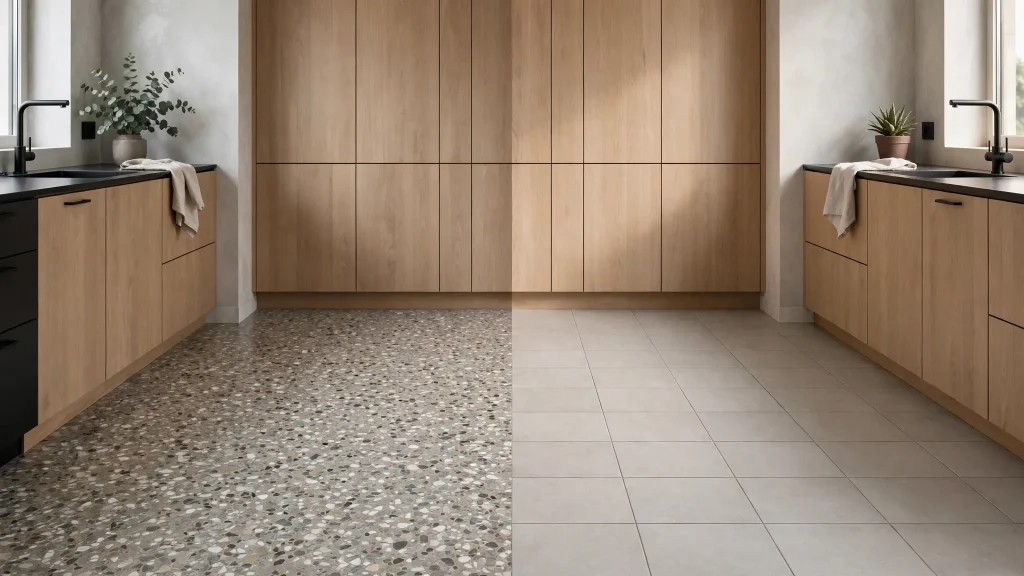
Choosing between Terrazzo vs Tile Flooring can affect your project’s appearance, maintenance needs, and long-term value. Both flooring options perform well in residential and commercial spaces, yet they differ in durability, installation methods, and overall cost. We often recommend comparing lifetime performance instead of focusing only on the initial budget. That approach helps avoid expensive replacements and repairs later.
Whether you are renovating a home, designing a retail store, or planning a commercial facility, understanding each material is essential. Terrazzo offers exceptional longevity with a seamless finish, while tile provides flexibility through countless styles and price ranges. This guide compares both flooring solutions using expert insights, practical experience, and industry-backed information to help you make a confident decision.
When comparing Terrazzo vs Tile Flooring, terrazzo stands out as a composite material made from marble, quartz, granite, glass, or recycled aggregates. These materials are embedded into cement or epoxy resin before polishing into a smooth surface. Modern epoxy terrazzo has become a preferred option for airports, hospitals, universities, and luxury commercial buildings because it combines strength with attractive design possibilities.
Terrazzo has existed for centuries, yet today’s manufacturing techniques deliver improved durability and lower maintenance. Industry professionals value terrazzo because it creates a seamless finish that resists moisture and heavy foot traffic. Many architects also appreciate its sustainability since recycled glass and stone aggregates often contribute to environmentally responsible construction projects.
Tile flooring consists of individual pieces manufactured from ceramic, porcelain, natural stone, or similar materials. Installers place each tile separately using adhesive and grout lines. This installation method allows damaged tiles to be replaced without removing the entire floor, making repairs simpler than many continuous flooring systems.
Porcelain tiles offer excellent moisture resistance, while ceramic tiles remain one of the most affordable flooring choices. Natural stone tiles provide premium aesthetics but require more maintenance. Homeowners often select tile because it delivers thousands of colors, textures, and finishes suitable for kitchens, bathrooms, offices, and outdoor areas.
Durability remains one of the biggest differences between Terrazzo vs Tile Flooring. Properly installed terrazzo floors commonly last more than 75 years, and many historic buildings still feature original terrazzo surfaces after nearly a century. Their seamless construction minimizes cracking and creates excellent resistance against daily wear.
Tile flooring also performs well, especially porcelain products with high PEI ratings. However, grout joints may discolor, crack, or require replacement over time. Individual tiles can chip from heavy impacts, although replacing one damaged tile is usually straightforward. For projects expecting constant traffic, terrazzo generally delivers superior long-term performance.
Key durability advantages include:
Terrazzo resists scratches and abrasion exceptionally well.
Porcelain tile performs better than standard ceramic tile.
Tile grout requires periodic cleaning and sealing.
Terrazzo minimizes dirt buildup because of its seamless finish.
Both flooring options resist moisture when installed correctly.
Installation complexity significantly affects project timelines. Terrazzo installation involves preparing the substrate, placing divider strips, pouring the mixture, curing, grinding, polishing, and sealing. This specialized process requires experienced installers and often extends project schedules by several days or weeks depending on floor size.
Tile installation moves faster because installers lay individual tiles over prepared surfaces before applying grout. Smaller residential projects often finish within a few days. Installation costs also remain lower because tile professionals are more widely available than certified terrazzo specialists across the United States.
Maintenance should remain a major factor when evaluating Terrazzo vs Tile Flooring. Terrazzo requires regular dust mopping and occasional damp cleaning with pH-neutral products. Periodic polishing restores its original shine without requiring extensive repairs.
Tile flooring also requires routine sweeping and mopping. However, grout lines demand additional attention because they trap dirt and stains. Natural stone tiles may require periodic sealing to maintain appearance and prevent moisture penetration. Long-term maintenance costs often become higher for tile because grout restoration adds ongoing expenses.
Many buyers focus first on installation costs. However, lifetime ownership costs tell a more complete story.
| Feature | Terrazzo Flooring | Tile Flooring |
|---|---|---|
| Initial Cost | High | Low to Moderate |
| Lifespan | 75–100+ years | 20–50 years |
| Maintenance | Low | Moderate |
| Repair Difficulty | More complex | Easier |
| Design Flexibility | Excellent | Excellent |
| Commercial Use | Outstanding | Very Good |
Although terrazzo costs considerably more initially, its long lifespan often offsets replacement expenses. Tile remains an excellent solution for projects with limited budgets or shorter ownership timelines.
Design flexibility plays an important role in Terrazzo vs Tile Flooring. Terrazzo creates custom patterns, company logos, decorative borders, and large seamless surfaces impossible to achieve with traditional tile layouts. Designers frequently use terrazzo in premium commercial interiors because it delivers a sophisticated architectural appearance.
Tile offers a remarkable variety through wood-look, marble-look, concrete-look, and geometric patterns. Manufacturers continuously introduce new collections that match changing design trends. From an environmental perspective, terrazzo often incorporates recycled materials, while many tile manufacturers now produce products containing recycled content and follow sustainable manufacturing practices.
Our experience reviewing commercial and residential flooring projects shows that selecting the right material depends on priorities rather than trends.
Choose terrazzo if you need:
Exceptional durability.
Minimal long-term maintenance.
Premium architectural appearance.
Heavy commercial traffic performance.
Choose a tile if you need:
Lower installation costs.
Faster project completion.
Easier future repairs.
Frequent design updates.
Flooring consultants generally recommend calculating ownership costs over 30 years instead of comparing installation prices alone. That approach provides a more accurate picture of long-term value. Explore our latest insights on Epoxy vs Vinyl Flooring.
The Terrazzo vs Tile Flooring decision depends on budget, expected lifespan, maintenance preferences, and design goals. Terrazzo delivers unmatched durability and premium aesthetics, while tile offers affordability and flexibility. Evaluating both immediate costs and long-term performance ensures the flooring choice supports your project’s functional and financial objectives.
